
After nearly three decades helping executives relocate to Dallas—from Silicon Valley CEOs to Fortune 500 VPs—I've learned that the biggest mistake people make isn't choosing the wrong house. It's not understanding how Dallas really works until after they've already bought.
So let me share what we tell every client during our first conversation, the insights that usually take newcomers a year to figure out on their own.
The Question Every Executive Should Ask First

"Where should I live?" That's what everyone asks. But here's the better question: "How do I want to live?"
Dallas isn't one city—it's a collection of distinct communities, each with its own personality, priorities, and pace. The neighborhood that's perfect for a finance executive with teenage kids looks nothing like the ideal spot for a tech VP who values walkability and nightlife.
And here's something that surprises most relocating executives: major employers span the entire metroplex. Financial services professionals have multiple excellent options—Dallas proper offers urban sophistication with firms in the downtown corridor, Plano provides established suburban luxury with JPMorgan Chase and major financial operations, and Southlake/Westlake delivers a complete lifestyle community with Charles Schwab, Fidelity, and Merrill Lynch headquarters. Tech headquarters cluster in Plano (AT&T, Texas Instruments), Frisco (Liberty Mutual, T-Mobile), and Dallas. Your ideal neighborhood depends on where you'll actually be working—and which lifestyle appeals to you most.
Let's break down what you really need to know.
Highland Park & University Park: Why Everyone Mentions Them First
There's a reason these adjacent neighborhoods come up in every Dallas conversation. Highland Park Independent School District consistently ranks as the #1 school district among all 5A/6A public school districts in Texas. Not "one of the best"—the actual best.

What the data shows:
- 97% of Highland Park High School graduates pursue college degrees
- Highland Park High School ranks #242 nationally and #36 in Texas
- 89% AP participation rate
- Student-teacher ratio of 15:1
- The district serves approximately 6,551 students across seven schools
What the data doesn't show: The Park Cities (as locals call Highland Park and University Park together) feel like a small town inside a big city. You'll see neighbors walking to Highland Park Village for coffee, kids biking to school, families out on evening strolls. It's genuinely walkable, genuinely safe, and genuinely connected.
The homes here range dramatically—from $800,000 cottages that need updating to $10+ million estates with every amenity imaginable. The combined median home price in Highland Park and University Park hit $2,248,750 in early 2025, up 4.6% year-over-year.
Who thrives here: Executives with school-age children who want top-tier public education without private school tuition, professionals who appreciate established neighborhoods with mature trees and architectural variety, families who value community involvement and traditional neighborhood life, and financial services professionals working in Dallas's downtown corridor who want a premium neighborhood with a short commute.
The honest downside: It's expensive, competitive, and moves fast. Properties in the most desirable sections receive multiple offers within days. You'll also navigate strict HOA guidelines and architectural review processes. And yes, it's predominantly an older, established community—if you want brand-new modern construction, you'll find more options elsewhere.
Preston Hollow: Privacy, Space, and Presidential Neighbors
Preston Hollow home prices surged 89.7% in the past year, with a median of $1.9 million. This North Dallas neighborhood attracts executives who want more space, more privacy, and a buffer from urban intensity.
Former President George W. Bush lives here. So does Mark Cuban. But you won't see them at the neighborhood block party—that's not really how Preston Hollow works. Lots are larger, homes are set back farther, and privacy is the priority.
What makes it special:
- Expansive lots (often an acre or more)
- Easy access to major business districts downtown and in Uptown
- Variety of architectural styles from Tudor to contemporary
- Proximity to elite private schools including Hockaday, St. Mark's, and Episcopal School of Dallas
- Room for home offices, guest houses, and expansive outdoor living
Who thrives here: Senior executives who work from home several days a week, families who value space over walkability, buyers who want room for home gyms and entertainment spaces, professionals who appreciate proximity to private country clubs.
The honest truth: You'll drive everywhere. There's no "village center" to walk to, and you won't randomly bump into neighbors. If you're coming from a neighborhood-centric community, the more spread-out nature can feel isolating initially. But for executives who've had enough of city density, that's exactly the appeal.

Frisco: The Fast-Growing Family Favorite
If Highland Park is old-money Dallas and Preston Hollow is established luxury, Frisco is new-wealth Texas—and it's booming for good reason.
Frisco's median home price reached $687,990 in June 2025, with values up 75% over five years. More importantly, Frisco Independent School District operates 12 high schools with 67% proficiency rates and exceptional college-prep programs. When a school district builds 12 high schools, they're serious about keeping class sizes manageable and opportunities abundant.
The Frisco advantage:
- Modern construction with smart home technology and energy efficiency
- Master-planned communities with resort-style amenities (think water parks, golf courses, event centers)
- Major corporate headquarters creating abundant job opportunities
- The Star (Dallas Cowboys headquarters), PGA golf, and coming attractions like Universal Studios
- New retail and dining that rivals anything in Dallas proper
- Safety statistics that make parents sleep better at night
Master-planned communities worth knowing:
- The Fields: Over 25 miles of trails, future Universal Studios proximity, shopping that rivals Legacy West
- Lexington: 950 acres with exceptional builders like Toll Brothers and Landon Homes
- Starwood and Shaddock Creek Estates: Established luxury with custom homes
Who thrives here: Executives with young families who want new construction, professionals working for companies with Frisco offices (Liberty Mutual, T-Mobile, many tech firms), families who value organized activities and community amenities, buyers who want more house for their money compared to Dallas proper.
The reality check: You're 25-30 miles from downtown Dallas. That's 35-45 minutes without traffic, potentially an hour or more during rush hour. If your office is in downtown Dallas and you need to be there daily, that commute adds up. Also, while the neighborhoods are beautiful, they can feel similar—if you're seeking historic character or architectural diversity, you won't find it in new construction.
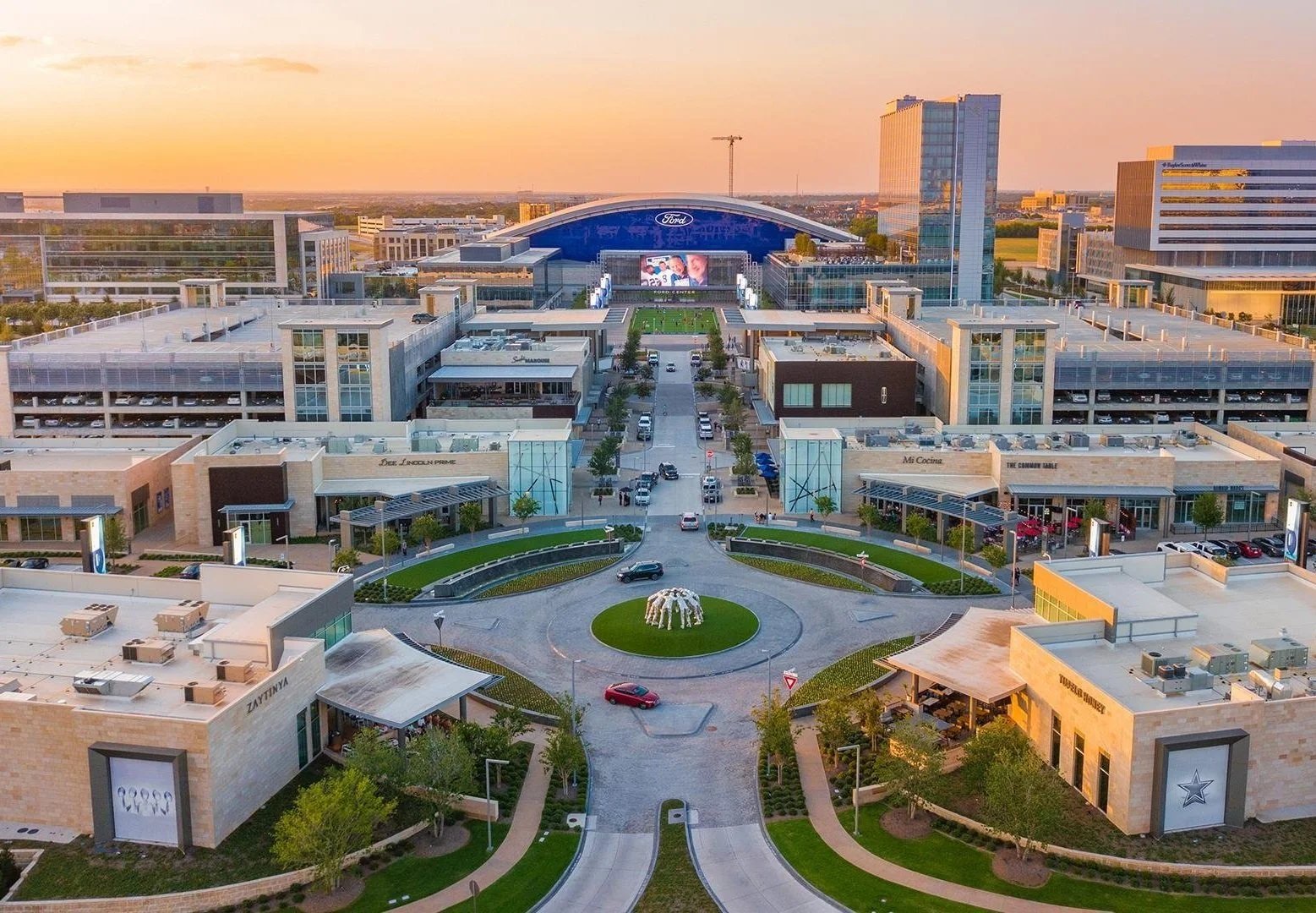
Plano: The Established Alternative
Plano offers something Frisco can't: maturity. While Frisco builds new, Plano has established neighborhoods with 30-year-old trees, proven schools, and a track record of value retention.
AT&T's 2025 return-to-office mandate has created significant demand in Plano, particularly from professionals needing to commute to major corporate campuses daily.
Why executives choose Plano:
- Major financial services presence: JPMorgan Chase operations, along with numerous fintech and financial firms
- Proximity to diverse major employers across industries (AT&T, Toyota, Liberty Mutual)
- Mix of established and new construction options
- Strong property value appreciation history
- Excellent schools without the Highland Park price premium
- Location within 25-35 miles of major business centers
- For financial services professionals: Consider your commute to Dallas, Plano, or Southlake/Westlake offices—Plano's central location provides access to all three
Who thrives here: Executives working for major corporations with Plano headquarters or offices, financial services professionals who value central access to multiple employment centers, families wanting established neighborhoods with mature landscaping, professionals seeking a proven market with stable appreciation, buyers who want suburban living without the longer Frisco commute or the premium Highland Park price tag.
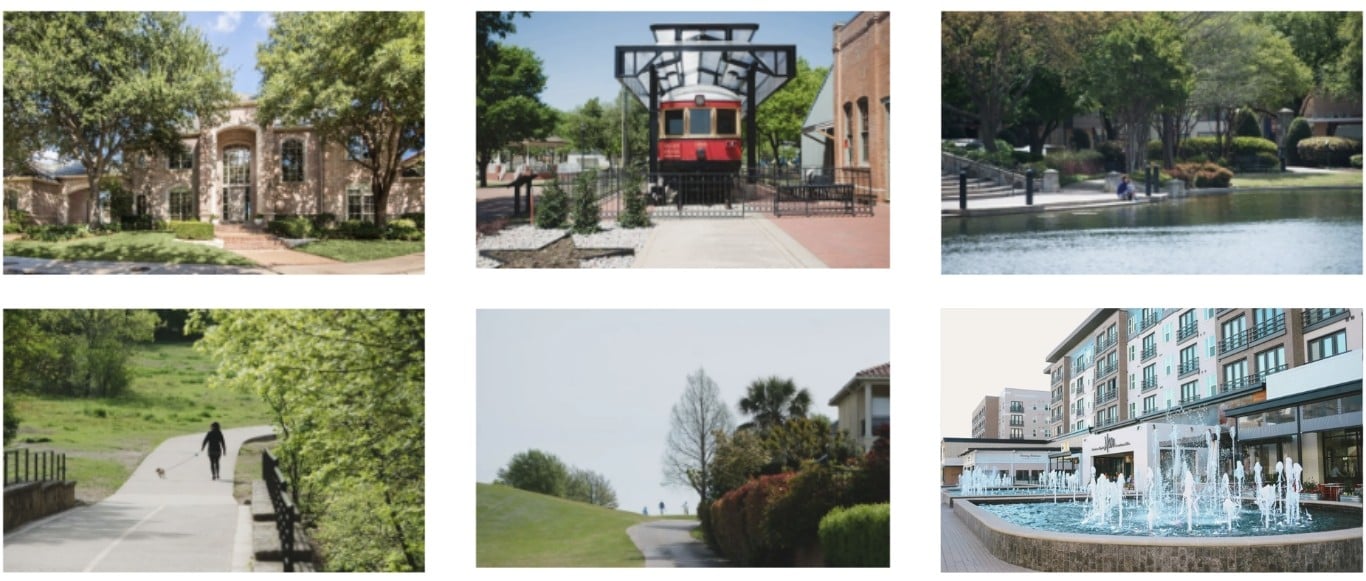
Southlake: Venture West for Space and Small-Town Excellence
If you're drawn to the idea of more land, a genuine small-town atmosphere, and a community that truly has it all, consider venturing west to Southlake.
Just 25 minutes from Downtown Dallas and only 10-15 minutes from DFW Airport, Southlake delivers exceptional convenience while feeling worlds away from urban intensity.
For financial services professionals, Southlake/Westlake represents one of three major financial centers in the metroplex (alongside Dallas and Plano). Major corporate headquarters here include Charles Schwab, Fidelity Investments, and Merrill Lynch. The advantage? You get proximity to your office combined with a complete lifestyle community—unlike Dallas's urban environment or Plano's suburban sprawl, Southlake offers the best of both worlds with a true small-town atmosphere.
The Southlake advantage:
- Carroll ISD consistently ranks among Texas's top school districts with nationally recognized academic and athletic programs
- Award-winning football and athletics programs that consistently compete at the state level
- Larger lots and more land compared to Dallas neighborhoods—room to truly spread out
- Southlake Town Square: upscale shopping, dining, and entertainment all in a beautifully designed, walkable town center
- Everything you need without having to venture out—top-tier restaurants, boutiques, services, and amenities all within the community
- Small-town feel with big-city amenities and a tight-knit community atmosphere
- Direct access to DFW Airport makes business travel effortless
- Natural beauty with established trees and open spaces
Who thrives here: Executives who work remotely or don't mind a 25-minute commute for significantly more space, financial services professionals working for Southlake/Westlake firms (Charles Schwab, Fidelity, Merrill Lynch), families who want top schools combined with championship athletic programs, professionals seeking larger lots and more land, buyers who value a complete, self-contained community where you rarely need to leave for shopping, dining, or entertainment, and those who appreciate small-town community involvement while maintaining access to Dallas when needed.
The honest reality: You're trading some proximity to Dallas proper for space, land, and a more relaxed pace of life. If your social circle or work requires frequent trips into Dallas or Uptown, factor in that 25-minute drive. But many Southlake residents find they rarely need to make the trip—the community is so complete that everything they need is right there.

A Note for Financial Services Professionals
If you're relocating for a financial services role, you have three excellent options, each with distinct advantages:
Dallas/Highland Park/University Park: Urban sophistication, 10-15 minute commute to downtown financial district, walkable neighborhoods, top-ranked schools, and premium positioning. Choose this for city lifestyle with suburban charm.
Plano: Central location providing access to financial operations throughout the metroplex, established luxury, excellent schools at lower price points than Highland Park, mature neighborhoods. Choose this for balanced suburban living with easy access everywhere.
Southlake/Westlake: Home to Charles Schwab, Fidelity, and Merrill Lynch headquarters, complete self-contained community, larger lots, championship athletics, small-town feel. Choose this for maximum space and a lifestyle where work, home, and community are all within minutes.
The "best" choice depends entirely on your specific employer location, your family priorities, and your lifestyle preferences. All three deliver exceptional quality of life—just in different ways.
The Schools Question: What You Really Need to Know
Every executive with children asks about schools. Here's what matters:
Highland Park ISD is the gold standard. It's not opinion—it's the #1-ranked 5A/6A district in Texas. With 97% college matriculation and an 89% AP participation rate, the academic focus is intense. Your kids will be surrounded by children of other professionals and business leaders, with all the advantages and pressures that brings.
Frisco ISD offers something different: 12 high schools mean smaller campuses, more leadership opportunities, and easier athletic participation. The district is newer, growing, and extremely well-funded. Academic quality is excellent without quite the same pressure-cooker intensity as Highland Park.
Plano ISD has produced countless successful graduates and maintains strong academic standards. It's larger and more diverse than Highland Park, with excellent college-prep programs.
Carroll ISD (Southlake) combines exceptional academics with legendary athletics. The district consistently ranks among Texas's elite while maintaining a balanced focus on both college preparation and championship-level sports programs. If you want your children to have access to top-tier athletics alongside rigorous academics, Carroll deserves serious consideration.
The question isn't which is "best"—it's which environment fits your family. Do your kids thrive under intense academic pressure? Are they interested in specific sports or activities where participation might be easier at a larger district? Do you want them in a smaller, more connected community or a larger, more diverse environment? Is athletic participation and achievement important to your family?
These are personal questions, and the right answer depends on your specific children and your family values.
The Real Timeline: What to Expect
Let me be honest about timing, because this surprises most relocating executives.
If you're starting from scratch: 4-6 months minimum
Here's the realistic breakdown:
- Weeks 1-2: Initial consultation, understanding your priorities, market education
- Weeks 3-4: Virtual tours of neighborhoods, narrowing focus
- Weeks 5-6: In-person tours (often compressed into a long weekend or week)
- Weeks 7-8: Finding the right property, making offers, navigating negotiations
- Weeks 9-12: Inspection, financing, closing process
- Weeks 13-16: Moving coordination, school enrollment, settling in
If your company is relocating you quickly: 6-8 weeks compressed timeline
This is doable but requires:
- Clear priorities from day one
- Flexibility on specific features
- Strong financing pre-approval
- Willingness to make quick decisions
- Professional guidance from someone who knows the market intimately
The advantage of working with relocation specialists: We compress weeks of learning into days. We know which neighborhoods to show you based on your priorities, we have relationships with listing agents that speed up the process, and we've handled enough executive relocations to anticipate issues before they become problems.
The Tax Advantage Nobody Explains Clearly
You've heard about Texas having no state income tax. Let me make it concrete.
California executive earning $400,000:
- California state income tax: ~$47,000 annually
- Texas state income tax: $0
- Annual savings: $47,000
New York executive earning $400,000:
- New York state income tax: ~$26,000 annually
- NYC city tax: ~$18,000 annually
- Texas taxes: $0
- Annual savings: $44,000
Over a decade, that California executive saves $470,000—nearly half a million dollars that can go toward a mortgage, retirement, children's college funds, or investments.
Property taxes in Texas are higher than many states (Highland Park runs around 2.2% of assessed value), but even accounting for property taxes, the net savings for high earners is substantial.
The practical reality: That extra $40,000+ annually changes what you can afford. Many executives moving from high-tax states discover they can buy significantly more house in Dallas while actually reducing their monthly housing cost when you factor in the tax savings.
What Surprises Most People About Dallas
After 1000+ transactions, we can predict what will surprise you:
The suburban nature: Dallas proper is relatively small. What people think of as "Dallas" is actually the entire Dallas-Fort Worth metroplex. You'll spend more time in suburbs than you might expect.
The driving: Everything requires a car, and distances are farther than they look on a map. That "quick 15-minute drive" becomes 35 minutes during rush hour.
The warmth (weather and people): Yes, summers are hot. But you'll also gain 9 months of amazing weather where you actually use that outdoor living space. And Texans really are friendly—it's not a stereotype.
The space: Coming from coastal markets, you'll be shocked by how much house you can afford. That 4,000-square-foot home with a pool isn't a fantasy—it's your actual budget.
The corporate community: You're not alone. Dozens of executives from your industry have already made this move. The Dallas Regional Chamber and professional network is robust and welcoming. Plus, major employers span the entire metroplex: financial services professionals will find firms in Dallas's downtown corridor, Plano (JPMorgan Chase and major operations), and Southlake/Westlake (Charles Schwab, Fidelity, Merrill Lynch). Tech headquarters cluster in Plano (AT&T, Texas Instruments), Frisco (Liberty Mutual, T-Mobile), and Dallas. Each location offers different lifestyle advantages—none is inherently "better," just different.
The Investment Angle
Let me put on my investor hat for a moment, because many executives think about real estate as wealth-building, not just shelter.
Dallas luxury real estate has delivered:
- Highland Park/University Park: Steady appreciation with recession resistance
- Preston Hollow: 89.7% appreciation over five years (unusual but reflects demand)
- Frisco: 75% appreciation over five years
- Plano: Stable, consistent appreciation with proven track record
The market dynamics: Between 2018 and 2024, 100 corporate headquarters relocated to Dallas-Fort Worth—more than any other metro area. In 2024 alone, 96 companies announced moves. Each headquarters brings executives, each executive brings housing demand, and that demand supports property values.
This isn't speculation—it's observable market dynamics driven by corporate relocations that show no signs of slowing.
The smart investor strategy: Buy in established neighborhoods with proven school districts. Property near top schools holds value through market cycles. When the economy softens, families still prioritize education, making these neighborhoods more recession-resistant.
My Honest Advice for Your First Month
You've closed on your house, the moving truck has arrived, and you're officially a Dallas resident. Here's what actually matters in your first 30 days:
Week 1: Just survive
- Unpack essentials
- Find your nearest grocery store (Central Market if you're in Dallas proper)
- Get Texas driver's licenses within 90 days of establishing residency
- Update your voter registration
Week 2: Get oriented
- Drive to your office during rush hour to understand real commute times
- Locate the nearest hospital/urgent care
- Find "your places"—coffee shop, gym, restaurant
- Join neighborhood social media groups or apps
- Explore Dallas attractions and lifestyle options
Week 3: Get connected
- Enroll kids in activities
- Visit the parks and trails you'll actually use
- Introduce yourself to neighbors (yes, people really do this in Texas)
- Find your service providers (dentist, doctor, veterinarian)
Week 4: Start exploring
- Check out the Dallas Arts District
- Visit the Dallas Arboretum
- Try restaurants in different neighborhoods
- Begin building your Dallas list of favorites
The mistake we see most often: Trying to do everything at once. Give yourself grace. It takes 6-12 months to truly feel settled, even when everything goes smoothly.
Why Experience Matters in Executive Relocations
Here's something we learned after helping hundreds of executives relocate: the process is fundamentally different from a typical home purchase.
Typical home buyers can afford to:
- Browse for months
- Visit multiple times
- Wait for the "perfect" property
- Navigate mistakes and learn as they go
Executive relocations require:
- Compressed timelines
- Often just one or two trips to tour homes
- Coordination with corporate relocation packages
- Understanding of tax implications
- Negotiation of seller concessions
- Quick decisions with long-term confidence
You're not just buying a house—you're choosing a community, selecting schools, positioning yourself for career success, and making an investment decision, all while managing a move, possibly selling a previous home, and keeping your day job.
The right real estate partner has done this enough times to anticipate problems, compress timelines, and protect your interests without requiring you to become a Dallas market expert in three weeks.
Let's Talk About Your Specific Situation
Everything I've shared comes from real experience with real executives making real decisions. But here's the truth: your situation is unique.
Your commute requirements are different. Your children's ages and needs are specific to your family. Your timeline might be compressed or flexible. Your housing priorities reflect your specific lifestyle and values.
The executives who are happiest with their Dallas relocation are the ones who started with a conversation, not a property search. We discuss what matters most to you, understand your concerns, explore your priorities, and then find the neighborhoods and properties that actually fit your life—not just the ones that "everyone" recommends.
Frequently Asked Questions from Relocating Executives
Over the years, I've answered thousands of questions from executives moving to Dallas. Here are the ones that come up in nearly every conversation:
"Can I really find a luxury home in 2-3 days of touring?"
Honestly? It depends. If you've done your homework virtually, worked with someone who pre-screened properties based on your exact criteria, and you're clear on your priorities, yes—we've helped executives find their perfect home in a compressed weekend tour.
But here's what makes it work: preparation. We spend 2-3 weeks before your visit doing virtual tours, discussing properties in detail, understanding your must-haves versus nice-to-haves, and creating a strategic touring plan. When you arrive, you're seeing pre-vetted homes, not starting from scratch.
The executives who struggle are the ones who show up without preparation expecting to "just look around and see what we like." That approach works when you have months, not days.
"What if my company's relo package doesn't cover Dallas's property taxes?"
This comes up often because Texas property taxes can surprise people coming from low-tax states. Highland Park’s property taxes run about ~1.56% of assessed value annually—so a $2 million home costs roughly $31,200 per year in property taxes.
For comparison, Frisco is often closer to ~1.7%—so a $700,000 home costs roughly $11,900 per year in property taxes.
Here’s the conversation to have with your employer: focus on the total cost of living, not just the line items. If you’re moving from a state with meaningful income tax, the state income tax savings can offset a big portion of the property tax difference for many executives.
Many companies are willing to adjust packages when you show the math. Others offer tax gross-ups or housing cost differentials. The key is having the conversation before you accept the relocation terms, not after.
Also worth noting: Texas offers a homestead exemption that can reduce your property tax burden somewhat on your primary residence.
"Should I rent first or buy immediately?"
We give different advice depending on your situation:
Buy immediately if:
- Your company is covering temporary housing during your search
- You have school-age children who need stability
- You're certain about the neighborhood based on research and tours
- Market conditions favor buying (which they currently do in Dallas luxury markets)
- You're planning to stay 5+ years
Rent first if:
- You're genuinely uncertain about which neighborhood fits your lifestyle
- Your spouse/partner hasn't seen Dallas yet and will be unhappy if you choose wrong
- You're not sure how long you'll stay in the Dallas market
- You want time to understand commute patterns and explore the city
- The rental premium is reasonable (sometimes it's not in luxury markets)
The rental market for luxury homes in Dallas can be challenging—there's limited inventory and high demand. But a 6-12 month rental can save you from a costly mistake if you're genuinely uncertain.
"How is Dallas's luxury home inventory right now? Will I have options?"
As of late 2025, Dallas luxury inventory is healthy but competitive. Unlike the frenzy of 2020-2021, you'll have choices, but good properties in prime neighborhoods still move quickly.
Highland Park and University Park typically have 40-60 active listings at any time, but the best properties receive multiple offers. Preston Hollow has more inventory given the larger lot sizes and higher price points. Frisco has abundant new construction to the North but limited resale inventory in established sections.
The key is being ready to move when the right property appears. That means:
- Financing pre-approval in hand (not just pre-qualification)
- Clear understanding of your decision criteria
- Ability to tour within 24-48 hours of a new listing
- Willingness to make strong offers on the right property
"What about private schools? Do I need to consider those?"
This depends entirely on your philosophy and your children's needs.
Highland Park ISD is so strong that many executives with the budget for private school choose public education instead. The academic rigor, college placement results, and peer group rival elite private schools without the tuition cost.
That said, Dallas has excellent private schools:
- Hockaday (girls, grades PK-12): One of the top girls' schools nationally
- St. Mark's School of Texas (boys, grades 1-12): Exceptional academics and college placement
- Episcopal School of Dallas (co-ed, grades PK-12): Strong academics with excellent facilities
- Greenhill School (co-ed, grades PK-12): Progressive education with strong arts
- The Lamplighter School (co-ed, grades PK-4): Feeds into the schools above
Private school annual tuition ranges from $25,000-$40,000 per child. Admission can be competitive, especially for older grades, so start the application process early if you're considering this route.
Many families choose Highland Park public schools for elementary and middle school, then evaluate private options for high school based on their child's specific interests and needs.
"I'm working remotely 3-4 days per week. Does location still matter?"
Yes, but differently. If you're only commuting 1-2 days per week, you can tolerate a longer drive in exchange for other benefits—more space, better value, newer construction, specific amenities.
This is actually opening up neighborhoods that previously didn't work for daily commuters. Southlake becomes viable even if your office is in Dallas. Prosper (north of Frisco) becomes an option. Even Celina and other emerging areas make sense if you prioritize land and privacy over commute convenience.
But consider these factors:
- What happens if remote work policy changes?
- Will you resent that 45-minute drive even if it's only twice a week?
- Does your family need to be closer to activities, schools, or social networks?
- Are you okay being farther from dining, entertainment, and cultural options?
The wrong answer for one person is the perfect answer for another. It comes down to your specific priorities and lifestyle.
"How do I handle a competitive multiple offer situation?"
Yes, this still happens regularly with the best properties in prime locations. Here's how to position yourself strongly:
Before you even start looking:
- Get a strong financing pre-approval from a reputable local lender
- Consider all-cash if your situation allows (even if it's through a line of credit)
- Have your down payment funds liquid and ready
When making an offer:
- Price matters, but terms matter more—quick closing, minimal contingencies, and flexibility help
- Personal letters to sellers work better than you'd think, especially in neighborhoods like Highland Park
- Escalation clauses can help but should be structured carefully
- Never waive inspection rights completely, but you can limit the inspection objection period
The reality: In Highland Park and the best streets of Preston Hollow, you'll likely compete for the best properties. But there's an art to winning that competition without overpaying—experience matters here.
"What's the best time of year to move to Dallas with kids?"
The ideal timeline for families with children is to move during summer, settle before school starts in August.
This gives your children time to explore the new area, attend summer programs where they'll meet other kids, and start school alongside everyone else rather than entering mid-year.
The reality: Corporate relocations don't always align with ideal timelines. If you're moving mid-year, Dallas schools are generally accommodating, and kids are surprisingly resilient. I've seen families move in January and have kids thriving by March.
"Should I sell my current home before buying in Dallas?"
This is the classic chicken-and-egg problem, and there's no one-size-fits-all answer.
Sell first if:
- You need the equity for your Dallas down payment
- Your current market is slow and selling might take time
- You don't want to carry two mortgages
- You prefer knowing your exact budget before committing
Buy first if:
- You have liquid assets for the Dallas down payment
- You can comfortably carry both mortgages temporarily
- Your current home is in a hot market and will sell quickly
- You want to avoid temporary housing and multiple moves
Many executives use bridge financing or portfolio loans to solve this problem. Your mortgage advisor can structure solutions that let you move without the timing stress.
"What mistakes do you see executives make most often?"
After 1000+ transactions, we can spot the common ones:
1. Prioritizing the wrong things They choose the biggest house instead of the best location. Five years later, they realize an extra bedroom matters less than being in the right school district or having a reasonable commute.
2. Underestimating Texas summers That pool and outdoor kitchen aren't just nice-to-have features in Texas—they're essential to your quality of life. If you're buying a luxury home without great outdoor living space, you're missing a huge part of the Dallas lifestyle.
3. Rushing the neighborhood choice They spend weeks agonizing over which specific house but only one day researching neighborhoods. Get the neighborhood right first; you can change houses later if needed.
4. Ignoring resale value Even if you think you'll stay forever, buy with resale in mind. Life changes. Companies relocate. Careers evolve. The best neighborhoods hold value through market cycles.
5. Not leveraging their relocation package fully Many executives leave money on the table by not negotiating package terms or not using all available benefits. Work with professionals who understand corporate packages and can help you maximize them.
"What's the one thing you wish every relocating executive knew?"
That buying a house in Dallas isn't really about the house—it's about choosing the life you'll live here.
The executives who are happiest three years later aren't necessarily the ones who bought the nicest house. They're the ones who bought in the neighborhood that fit their family's lifestyle, values, and priorities.
Take the time to understand that before you start looking at properties. Everything else follows from there.
Ready to Start Your Dallas Journey?
Whether you're still exploring the possibility of moving to Dallas or you've received your relocation package and need to move quickly, let's have a conversation about what this move means for you and your family.
We've helped executives from nearly every industry make successful transitions to Dallas. We understand corporate relocation packages, we know how to navigate tight timelines, and we have the local relationships that turn complicated processes into smooth transitions.
More importantly, we've been part of the Dallas luxury market for nearly three decades. We watched Frisco transform from farmland to a thriving city. We've seen corporate headquarters arrive and neighborhoods emerge. We know the market cycles, the school districts, the hidden gems, and the potential pitfalls.
Browse our Dallas luxury home listings or explore our detailed neighborhood guides to start your research.
Let's start with a simple conversation about your situation:
📱 Brandon: (214) 206-7778
📧 Email: [email protected]
📱 Tiffany: (972) 979-0978
📧 Email: [email protected]
No pressure, no sales pitch—just honest guidance from people who've done this hundreds of times and genuinely love helping executives and their families find their perfect Dallas home.
Your Dallas story starts with understanding what you're really looking for. Let's figure that out together.
The Hawkins Group at Douglas Elliman
Nearly 30 years of Dallas luxury real estate expertise
Specialists in executive relocations and life-stage transitions
Highland Park | University Park | Preston Hollow | Frisco | Plano | North Dallas
Learn more about our team and approach

P.S. — The most successful relocations start with a conversation 4-6 months before you need to move, not 4-6 weeks. If Dallas is in your future, even if the timeline isn't certain yet, let's start the conversation now. The earlier we start planning, the better your outcome.