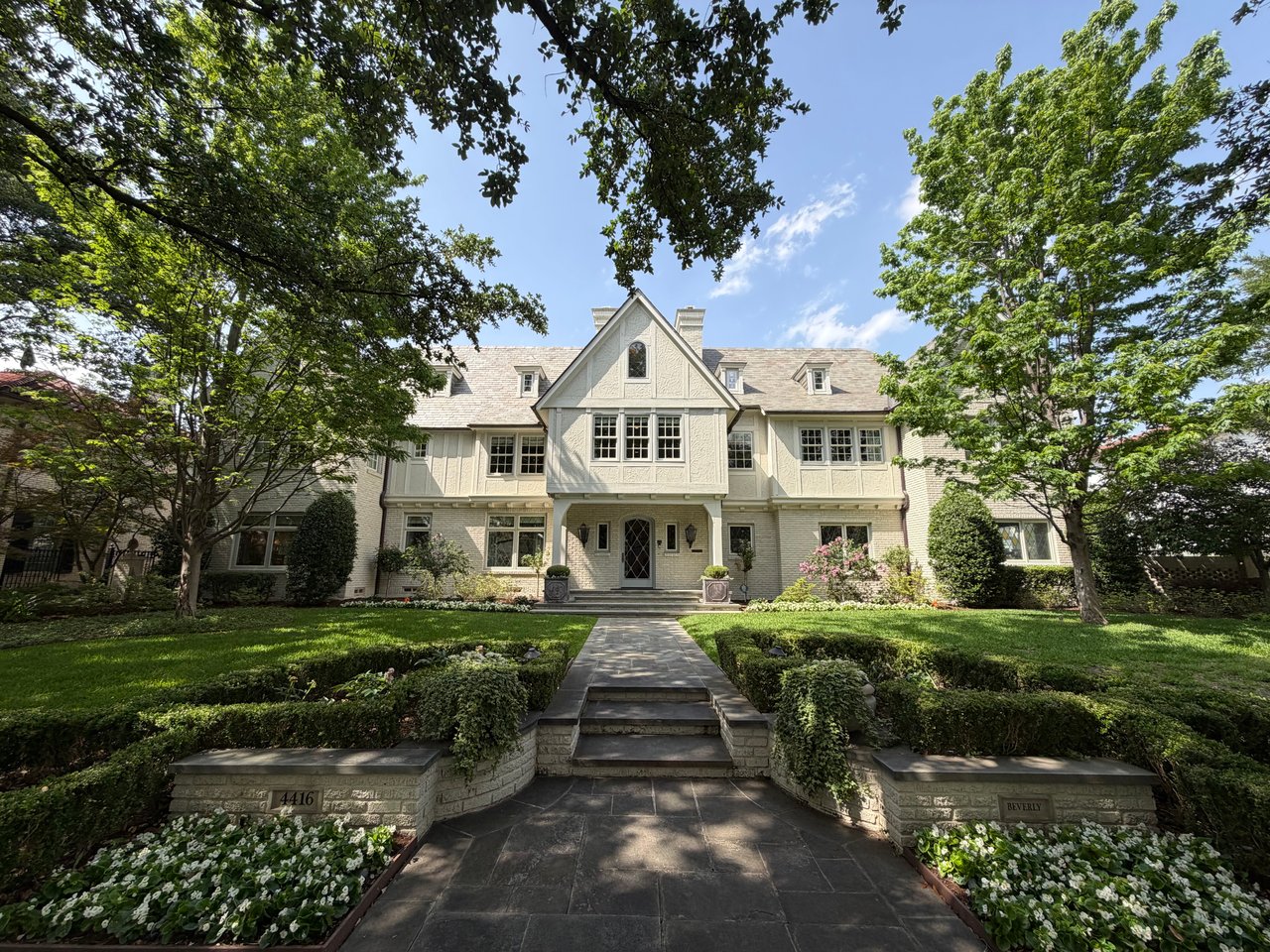
There is a moment, usually somewhere between the canopy of oaks on Beverly Drive and the cobblestone sidewalks of Highland Park Village, when someone visiting Highland Park for the first time goes quiet.
It happens consistently enough that we have stopped being surprised by it.
We live here. We are at Highland Park Village several days a week — having dinner, catching up with friends, or dropping into one of the events that seem to happen there constantly. It is genuinely part of how we live, not just a beautiful place to pass through.
We know which evenings the streets feel most alive. We know which mornings the pool at Davis Park is glassy and still. We know this neighborhood the way you know something when it is genuinely yours.
We are not observers of Highland Park. We are neighbors.
And that vantage point is why we want to tell you something the data alone cannot fully explain.
This is not simply an expensive zip code. It is one of the most deliberately protected, most intentionally designed, and most genuinely livable residential addresses in the country.
There is a reason people who move here rarely leave. There is a reason people who leave spend years trying to get back.
And there is a reason the price of entry reflects something real — something that took more than a century to build and simply cannot be recreated anywhere else.
A Town, Not a Neighborhood
Most people refer to Highland Park as a Dallas neighborhood.
That framing undersells what it is.
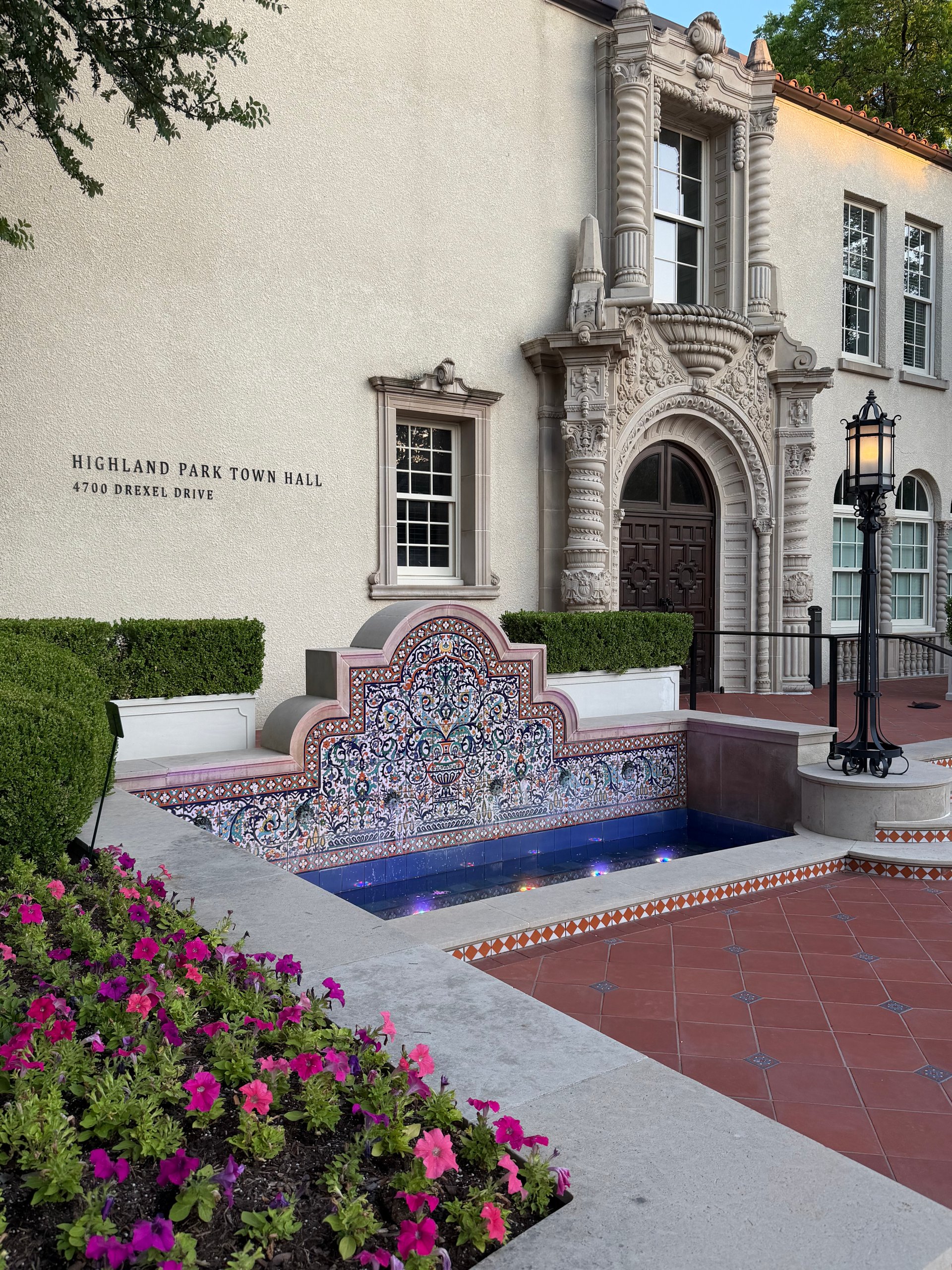
Highland Park is its own incorporated municipality — the Town of Highland Park — with its own town council, its own public works, its own fire department, and most meaningfully for anyone serious about where they are planting roots, its own police force.
The Police Force That Sets the Standard
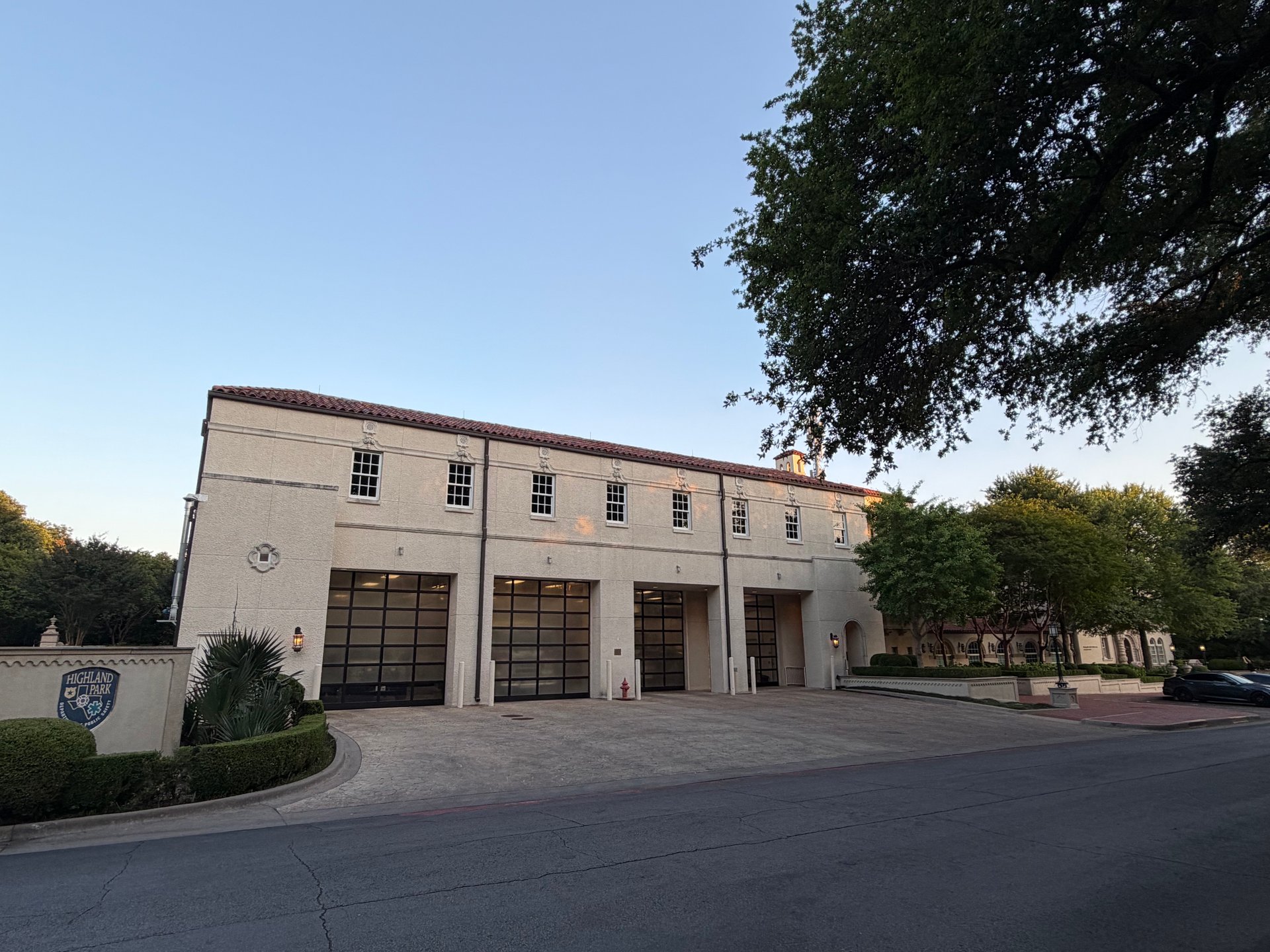
The Highland Park Department of Public Safety operates independently of the Dallas Police Department.
It is fully funded by the town's property tax base and dedicated exclusively to roughly 8,500 residents across 2.2 square miles.
The department publishes its response time publicly on its website: under two minutes.
That is not a boast. That is a standard they hold themselves to, and consistently meet.
The Story That Says Everything — Our Very Memorable Introduction to the Neighborhood
We know this not only from the statistics but from personal experience.
Not long after we moved into our home in Highland Park, we stepped out onto the balcony one evening to measure for patio furniture.
The door locked behind us.
No phones. No way back in.
Just two people standing on a balcony in the dark, wondering how this was going to end.
And then — because Highland Park police patrol these blocks at all hours with their windows down — an officer drove slowly past the house below us.
We yelled. He heard us.
And just like that, we were no longer alone in this problem.
What followed was, in retrospect, one of the funnier evenings of our lives — though it did not feel that way at the time.
The officer got on his computer, worked through every option he could to log into our iCloud & retrieve our garage code, when that didn’t work he called the locksmith, when he ran into trouble, he called in more reinforcements.
The fire department arrived. With a giant ladder.
Apparently our house is extremely secure. Which is, all things considered, wonderful news for a new homeowner to discover — just perhaps not the way we discovered it.
After what felt like a very long evening involving the police, the fire department, a locksmith, and a great deal of problem-solving, we were finally back inside.
Every single person stayed until it was solved. Patient, kind, completely unhurried. Nobody made us feel like an inconvenience. Nobody left early.
We also, somehow, did not wake a single neighbor. Which we consider a small miracle and a testament to how deeply this neighborhood sleeps when it feels safe.
We hope you get to meet the Highland Park police and fire department the way most residents do — at a community event, a neighborhood gathering, or simply waving from the sidewalk on a morning walk.
But if you ever find yourself locked out on a balcony at night, know that you are in very good hands.
That is one story. There are thousands more like it in this neighborhood.
The point is not that something went wrong. The point is what happened when it did.
Deed Restrictions That Protect What Makes This Place Special
Highland Park's deed restrictions and zoning codes are among the most protective in Texas, governing architecture, setbacks, lot coverage, and permitted land uses on every residential street in the town. They are the structural reason a block in Highland Park today looks, in most essential ways, the way it looked a century ago. No commercial encroachment has eroded what generations of residents chose to protect.
In most American cities, a prestigious neighborhood's character can erode over time.
A commercial interest moves in. A developer proposes something incompatible. Zoning variances get approved one at a time until the block no longer looks like what drew people there in the first place.
In Highland Park, that story largely does not happen.
The town's deed restrictions and zoning codes govern architecture and design standards, setbacks and lot coverage, permitted uses on residential streets, and what can and cannot be built and how. They are the reason a block in Highland Park today looks, in most essential ways, the way it looked decades ago.
The Story of 3635 Beverly Drive
Here is how deeply this commitment runs.
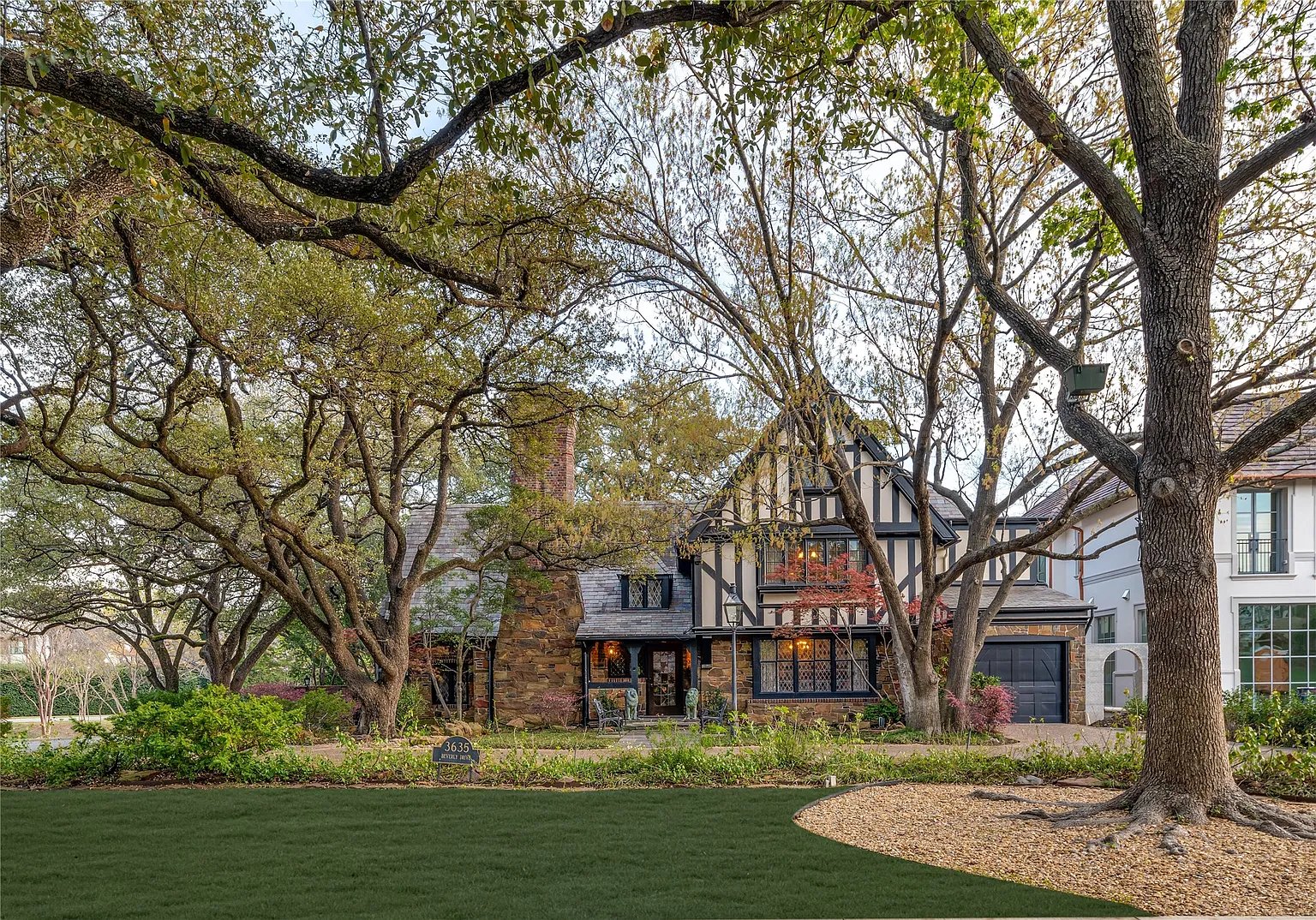
The home at 3635 Beverly Drive was built in 1925 by Anton Korn, the most celebrated residential architect of the Park Cities era, as his own family's home.
His wife Marie was an opera soprano who debuted with the Dallas Symphony in 1927.
He designed a balcony in the two-story great room specifically so she could stand above their dinner guests and sing to them.
The oak timbers in that room were salvaged from the Oriental Hotel when it was demolished in downtown Dallas.
That home is still standing today — essentially unchanged on the outside — currently listed at $7.5 million.
And it carries a deed restriction requiring the preservation of at least two exterior walls, because the family selling it after a century asked future buyers, in writing, to promise not to tear it down.
That is not a legal technicality.
That is a community that understands what it has and chooses, generation after generation, to protect it.
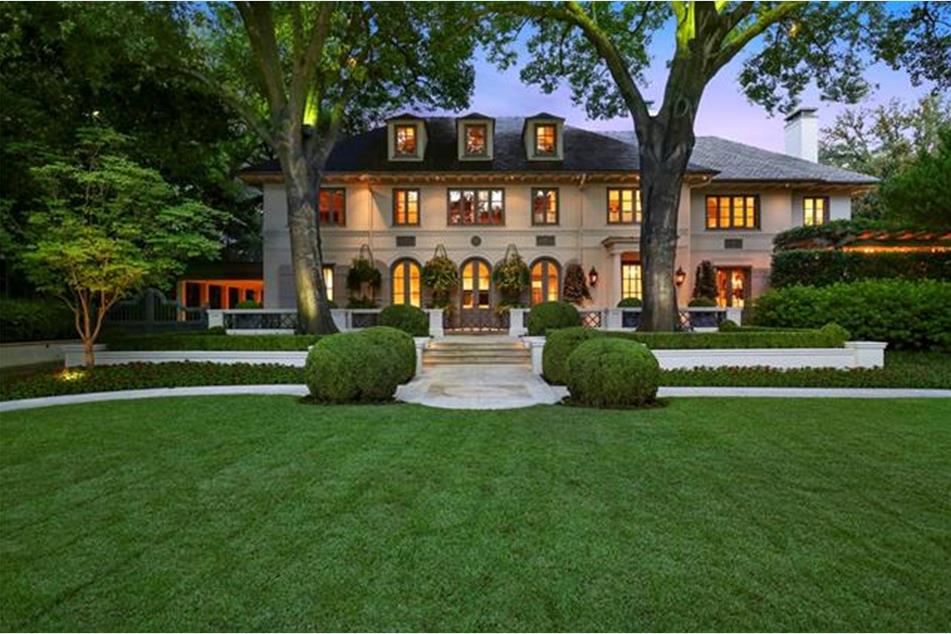
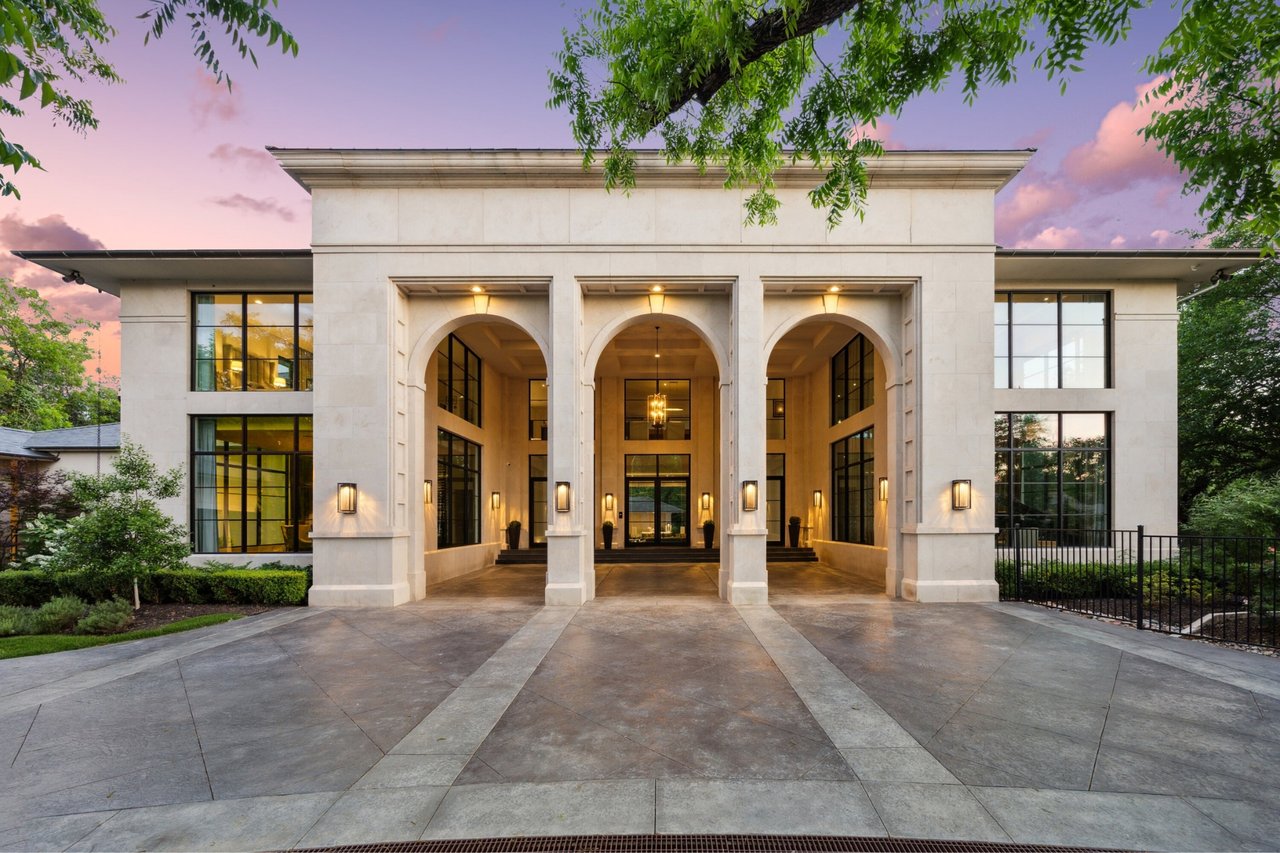
A Century of the Most Beautiful Architecture in Texas
HPISD: The School District That Changes Everything for Families
Highland Park Independent School District consistently ranks first in Texas for academic performance, with a college placement rate approaching 100 percent and test scores that compare to the best public districts nationally. HPISD serves both Highland Park and University Park, and it is the primary reason families with children begin seriously evaluating the neighborhood.
Highland Park Independent School District serves both Highland Park and University Park.
Here is what consistently ranking first in Texas actually means: a college placement rate approaching 100 percent, test scores that compare to the best public districts nationally, and a school community that has been a point of pride for generations of HP families.
HPISD is the reason a family considers Highland Park seriously.
Everything else here is the reason they never want to leave.
The Pool, the Parks, and What Daily Life Here Actually Feels Like
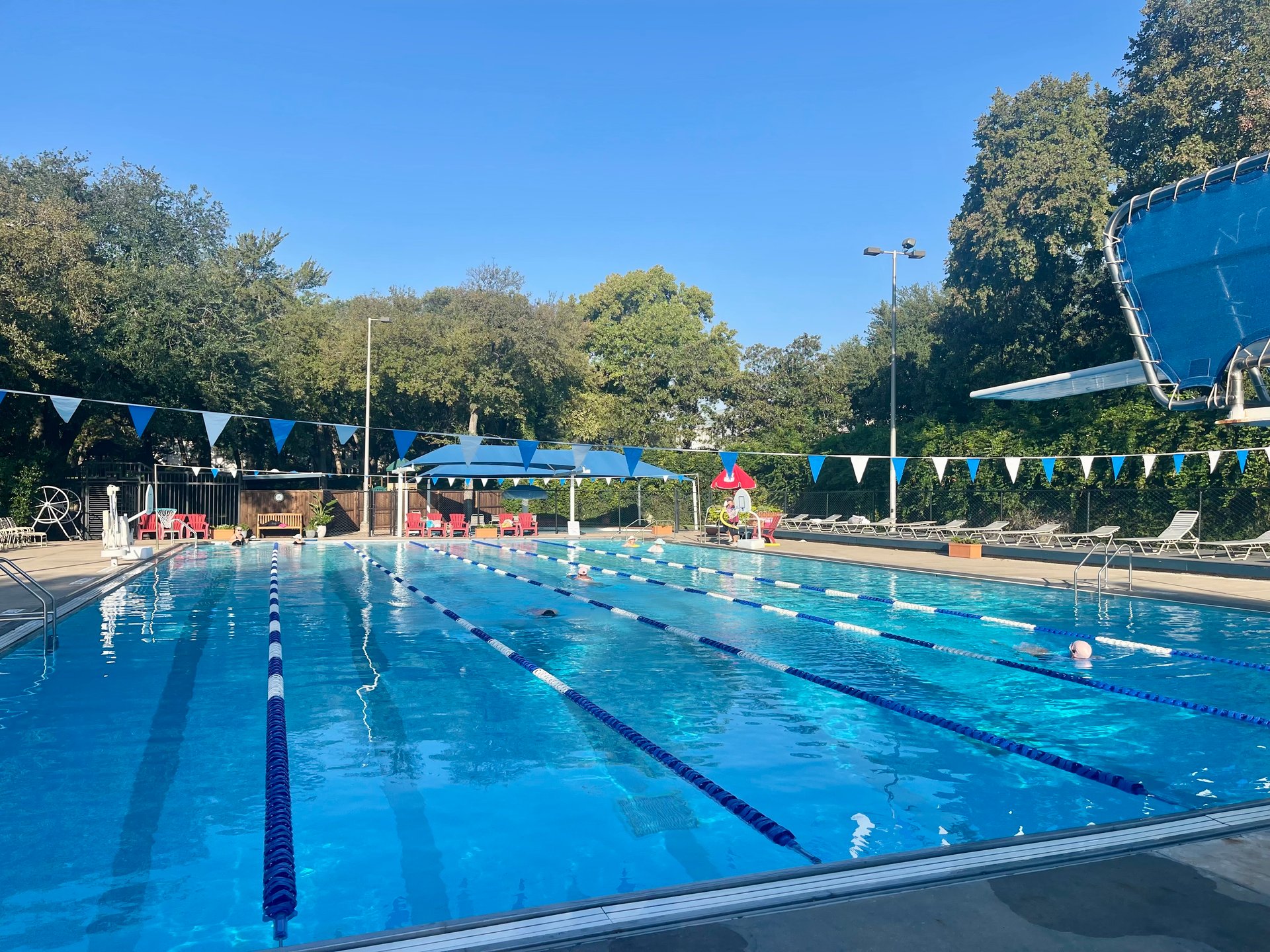
Every Highland Park homeowner has access to the Highland Park Swimming Pool at Davis Park, an Olympic-size, temperature-controlled pool actively cooled during Texas summer, with adults-only morning lap swim hours, a separate kiddie pool, and a full concession stand. No club membership or HOA application is required. It comes with the address.
This is the part that surprises people who are researching Highland Park from the outside.
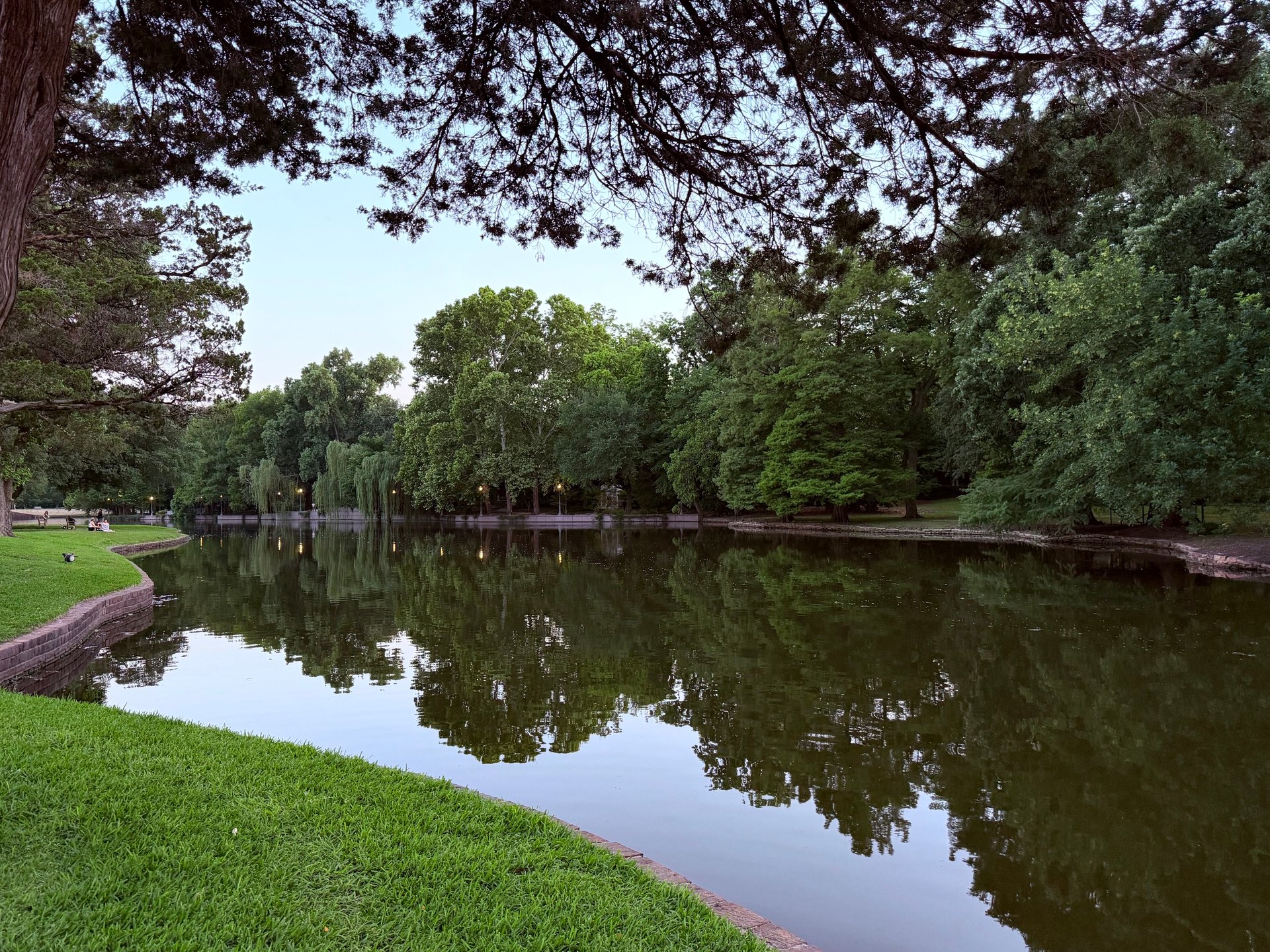
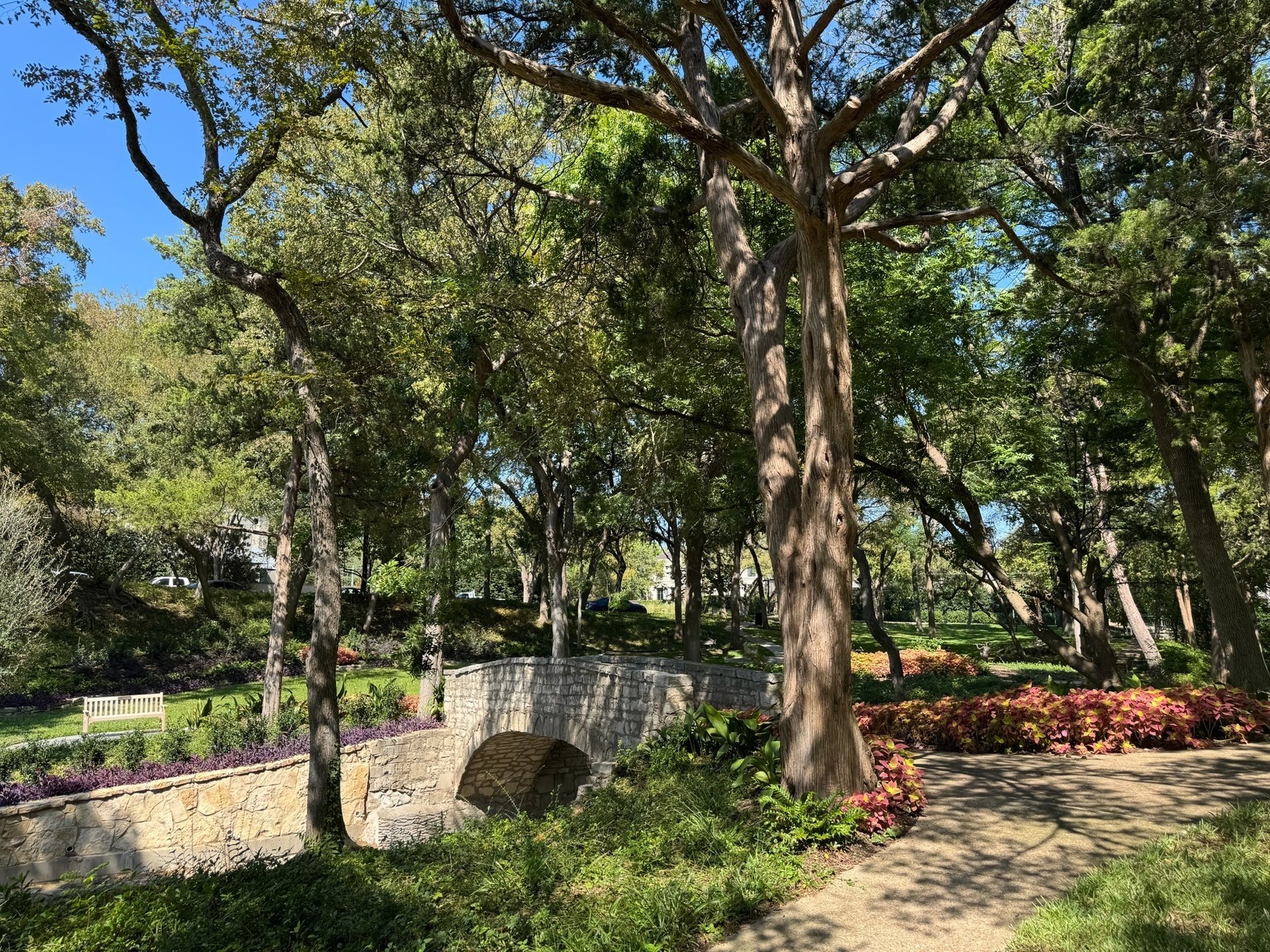
Highland Park was designed around its parks from the very beginning.
Wilbur Cook planned the green space before a single house was built. You feel it everywhere — the lushness, the spaciousness, the sense that the outdoors is not a backdrop to the neighborhood but the actual fabric of it.
The Pool at Davis Park: A Resident-Only Amenity Unlike Any Other
The Highland Park Swimming Pool at Davis Park is an Olympic-size pool available exclusively to Town of Highland Park residents.
And it is temperature-controlled — both heated when the weather calls for it and actively cooled during summer.
In Texas, that distinction matters more than it might seem. In July and August, a pool that is not cooled is a warm bath.
The Davis Park pool is cold when you want it cold.
The pool offers adults-only lap swim from 7 to 10 AM, a separate kiddie pool for families, a concession stand with food and drinks, and a full-day social atmosphere that turns an amenity into a genuine community institution. No club membership. No HOA application.
It comes with the address.
The Courts, the Parks, the Playgrounds
New pickleball courts — beautiful, consistently full throughout the day. Tennis courts with lessons available at multiple skill levels. Parks and playgrounds woven throughout the neighborhood as the original design intention.
When you add the walkability to Highland Park Village, the evenings along Katy Trail, and the pool at Davis Park, you begin to understand something.
The lifestyle here is not a collection of amenities.
It is a way of living that happens to come with one of the best addresses in Texas.
Highland Park Village: Where the Neighborhood Goes to Live
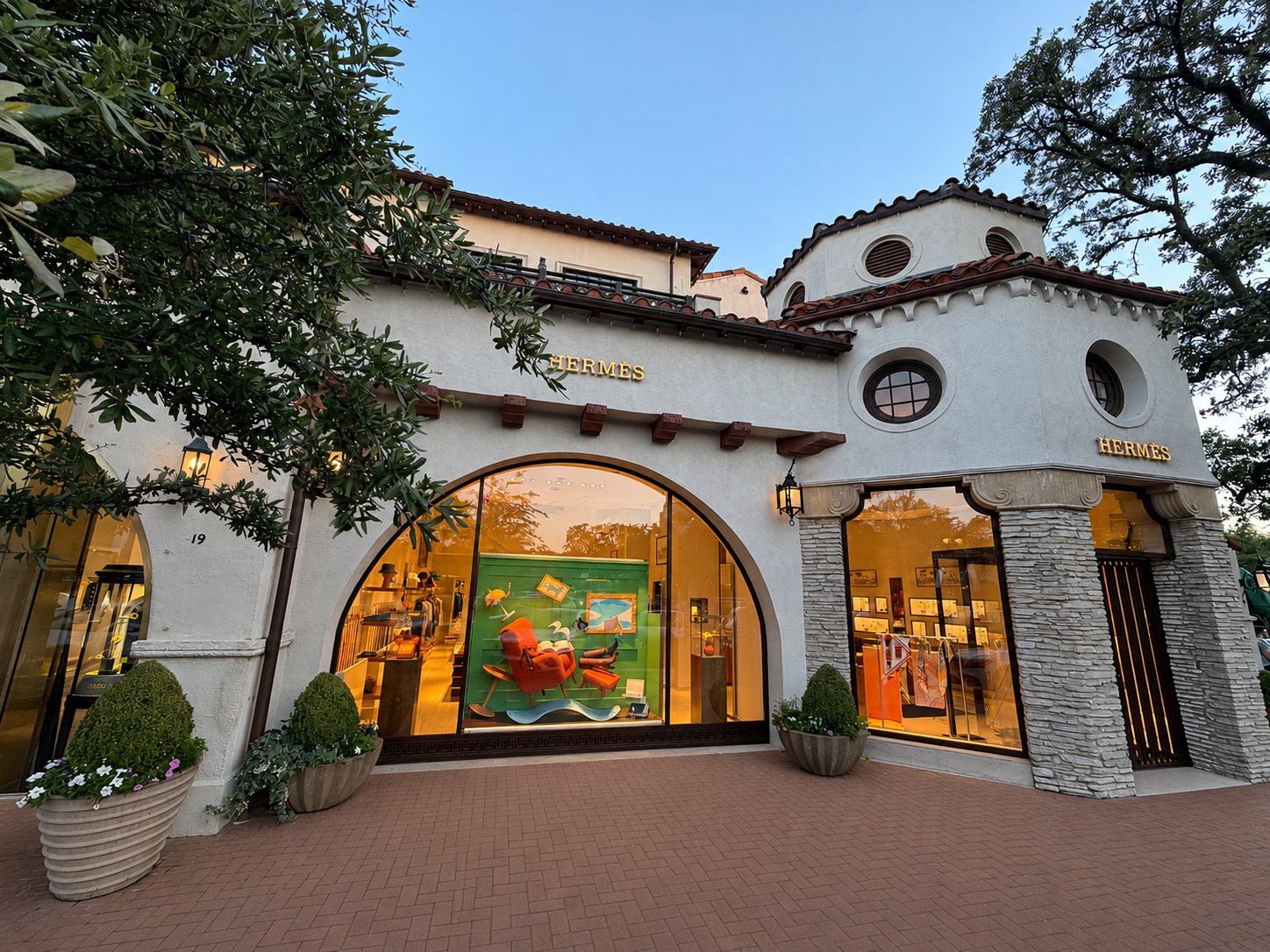
Highland Park Village, opened in 1931, is the first planned shopping center ever built in the United States and a designated National Historic Landmark. It houses more than 50 luxury retailers — including Chanel (which completed a full two-level boutique redesign in 2024), Dior's 15,000-square-foot flagship, Hermès, Goyard, and Van Cleef and Arpels — alongside restaurants including Fachini, Lounge 31, and Bistro 31, all within walking distance of residential streets throughout Highland Park.
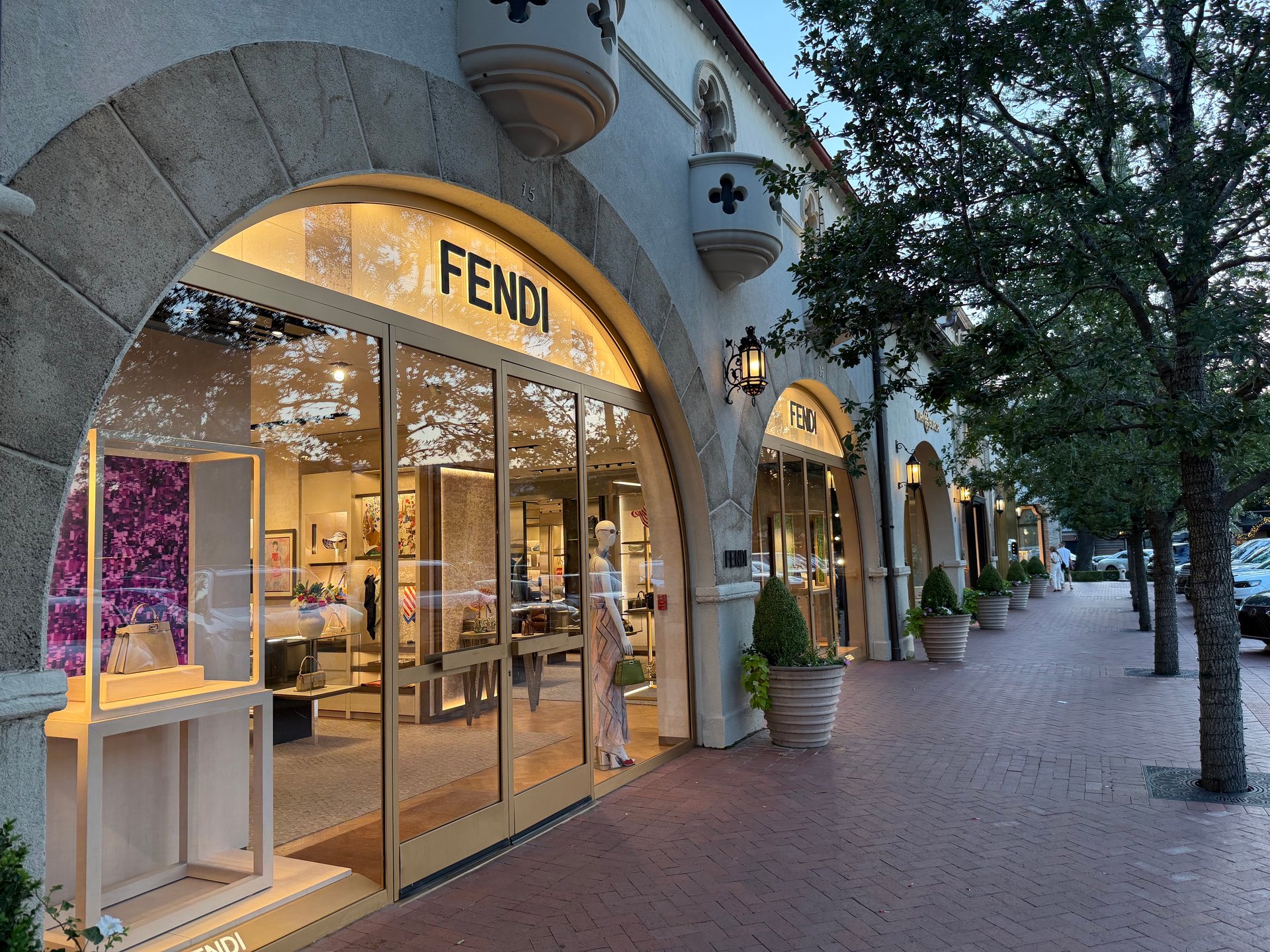
Opened in 1931 and designed by Fooshee and Cheek — the same architectural firm that shaped some of the neighborhood's finest Spanish Revival residences — Highland Park Village is the first planned shopping center ever built in the United States.
It is a National Historic Landmark. It is also, more practically, the place where this neighborhood gathers.
Chanel completed a full two-level boutique redesign in 2024. Dior maintains a 15,000-square-foot two-story flagship and restaurant. Hermès, Goyard, and Van Cleef and Arpels line cobblestone sidewalks you can walk to from your home. Brunello Cucinelli, Tom Ford, and Valentino are among many others. Fachini is where you go for the kind of dinner where you might recognize someone across the room. Lounge 31 is an omakase experience that requires planning ahead. Bistro 31 and Honor Bar on a Friday afternoon look like the entire neighborhood decided to arrive at the same time.
We are at Highland Park Village several days a week — dinner with friends, weekend events, the kind of easy socializing that becomes part of your weekly rhythm when it is this close to home.
For people who live in Highland Park, the Village is not a destination. It is an extension of the living room. It is where the neighborhood naturally gathers, has always gathered, and will keep gathering long after the next retail concept opens somewhere else in Dallas.
The ability to walk to a destination that rivals Madison Avenue and Robertson Boulevard is not something you manufacture by building something new nearby.
It took a century to become what it is — and it belongs to the people who live here.
What Separates Highland Park from Every Other Luxury Address in Dallas
Every luxury neighborhood in Dallas offers beautiful homes, excellent restaurants, and proximity to the best of the city. None of them offers an independent incorporated municipality with its own dedicated police department, deed restrictions that have protected the neighborhood's character for more than a century, and a permanently constrained land supply of 2.2 square miles. That structural combination is what makes Highland Park categorically different from every other expensive address in Dallas.
Preston Hollow is exceptional. Bluffview is beautiful. The streets around Knox and Henderson are among the most desirable urban addresses in the city. We would know: we sell in all of them.
There is a conversation we have with clients who are genuinely weighing Highland Park against other luxury addresses in Dallas. The answer usually reveals itself quickly once you know what to listen for. Where are their children going to school, and does a world-class public district matter to them or are they already committed to private? How important is proximity to downtown or Love Field? Are they looking for a walkable, self-contained way of life, or do they prefer more space and privacy? These questions do not have a universal right answer. But for families where the answers point toward Highland Park, the comparison tends to stop being a comparison.
A developer can build beautiful homes in any neighborhood. A retailer can open a destination restaurant on any block that draws the right foot traffic. Streetscape improvements happen. New parks get designed.
What cannot be rebuilt is an independent municipal government that has been operating for over a century. What cannot be recreated is a land supply permanently fixed at 2.2 square miles. What cannot be manufactured in a decade is a deed restriction regime that has protected architectural character through housing booms, recessions, and the relentless development pressure that has reshaped every other neighborhood in Dallas at least once.
The buyers who understand this distinction move decisively. The buyers who are still treating Highland Park like a comparably priced option in a larger set sometimes take a year to realize why the comparison does not quite work.
We see both. We always tell them the same thing.
The price of Highland Park reflects what the market knows about permanence. The rest of Dallas is still figuring out what it wants to be. Highland Park already knows.
What This Address Costs and Why It Makes Sense
Highland Park homes begin around $2.5 million for entry-level or older properties, with fully updated homes starting near $3.5 to $4 million. The most active market tier runs from $5 to $7 million. Premier streets and larger estates range from $8 million to $15 million and above. The market has appreciated more than 130 percent over the past decade, and well-priced properties typically sell in under 45 days.
Let's talk about the number honestly — because it deserves a direct conversation.
Highland Park is not the most affordable address in Dallas. Here is what the market looks like in 2026:
| Price Point | What You Typically Find |
|---|---|
| ~$2.5M | Entry-level, older properties, may need updating |
| $3.5M to $4M | Move-in ready homes on established streets |
| $5M to $7M | Fully updated homes — the most active tier |
| $8M to $15M+ | Premier streets, larger estates |
For buyers coming from Los Angeles, New York, or Chicago, those numbers may feel familiar. For buyers coming from within Texas, they can feel like a step up from what comparable square footage costs elsewhere in the metro. Both reactions are reasonable.
Here is what the price actually reflects: an independent town with its own police department and a published sub-two-minute response time. HPISD — the top-ranked public school district in the entire state of Texas — available to every family who buys here. Deed restrictions that have protected this neighborhood's character for more than a hundred years. Municipal amenities that simply do not exist at any other Dallas address at any price. A walkable, world-class shopping and dining destination two blocks from residential streets.
What the Numbers Show
The market has appreciated over 130 percent in the past decade.
Days on market for well-priced properties average fewer than 45 days.
A meaningful share of the most desirable transactions never reach public listing at all.
The buyers who hesitate on Highland Park almost always cite price as their reason. Then they circle back 12 to 18 months later — paying more for a comparable home, if one is even available.
What you are paying for in Highland Park is not square footage.
It is a protected, irreplaceable address in a town that has been built and rebuilt with genuine care for more than a century.
Why This Cannot Be Replicated, Anywhere
You cannot build another Highland Park.
Not in Dallas. Not anywhere.
You cannot build another Highland Park. Not in Dallas. Not anywhere. Consider what would have to exist, all at once, in the same 2.2 square miles: an independent incorporated town with its own legal structure and governance; a dedicated police department with a sub-two-minute published response time; over a century of deed restrictions that have held the neighborhood's character intact; homes built by the finest architects of their era, still standing, still protected; a National Historic Landmark shopping village within walking distance of residential streets; an Olympic pool cooled for Texas summers, reserved for residents only; parks, courts, and playgrounds woven into the original design before a house was built; and the top-ranked public school district in Texas serving every family who lives here.
None of this can be assembled from scratch. It accumulated over more than a hundred years of people choosing, again and again, to protect what made this place remarkable rather than trade it away.
Every city has expensive neighborhoods.
Very few have a 2.2-square-mile incorporated town where a family selling a home after a century asks the next owner, in writing, to promise to keep it standing.
That is what this neighborhood is. That is what you are buying into.
And that is why the price of entry — whatever it feels like on first glance — is the beginning of the conversation rather than the end of it.
Frequently Asked Questions
Why is Highland Park Dallas so expensive?
Highland Park is an independent incorporated town with its own police department, deed restrictions that protect its character, HPISD ranked first in Texas academically, and a permanently constrained land supply of 2.2 square miles. These structural features preserve and appreciate value in ways that location alone cannot replicate. The market has appreciated over 130 percent in the past decade.
Who designed Highland Park and what makes its layout different from other Dallas neighborhoods?
Wilbur David Cook, the landscape architect who also designed Beverly Hills, California, laid out Highland Park in the early 1900s. He built parks, creeks, and tree-lined boulevards into the design before a single house was built. That original design intention is still visible and intact across the neighborhood more than a century later.
What is the Highland Park Department of Public Safety?
The HPDPS is an independent municipal police force funded entirely by Highland Park property taxes and dedicated exclusively to roughly 8,500 residents. Their published response time is under two minutes. Officers patrol the neighborhood at all hours of the day and night, windows down, which is how they heard us yelling from our balcony the night we locked ourselves out as new homeowners. The fire department came too. With a ladder. Our house is apparently very secure.
What amenities come with owning a home in Highland Park?
Every Highland Park homeowner has access to the Highland Park Swimming Pool at Davis Park — an Olympic-size, temperature-controlled pool with adults-only morning lap swim hours, a separate kiddie pool, and a concession stand. New pickleball courts, tennis courts with lessons, and beautifully maintained parks and playgrounds are spread throughout the town. No separate membership or HOA required.
What school district serves Highland Park?
HPISD, Highland Park Independent School District, serves both Highland Park and University Park. It ranks first in Texas for academic performance with a near-100 percent four-year college placement rate and nationally competitive test scores.
What is the entry price for homes in Highland Park in 2026?
Entry-level Highland Park begins around $2.5 million for older or smaller properties. Move-in-ready homes start around $3.5 to $4 million. The most active tier runs from $5 to $7 million. Premier streets and larger estates range from $8 million to $15 million and above.
Is Highland Park worth the price compared to other Dallas luxury neighborhoods?
The price reflects an independent town with its own police department, the top public school district in Texas, deed restrictions protecting the neighborhood's character for over a century, a temperature-controlled Olympic pool, and walkability to a National Historic Landmark shopping destination. The market has appreciated over 130 percent in a decade. Most buyers who hesitate on price find themselves returning a year later, paying more for a comparable home.
What architectural styles are found in Highland Park?
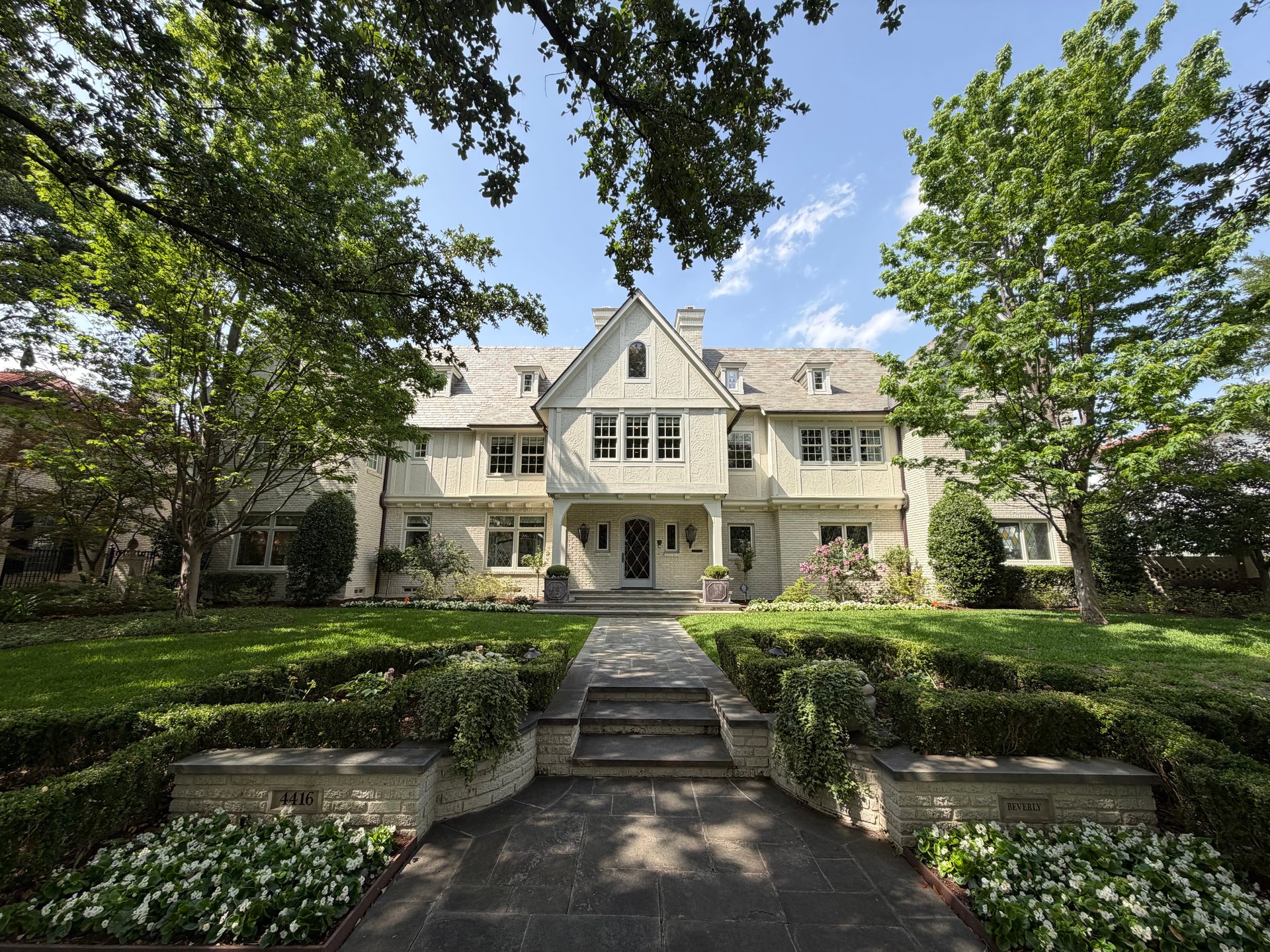
Highland Park has more than a century of serious residential architecture: Tudor Revival, Spanish Revival, Colonial, Georgian, French Norman, Craftsman, and contemporary homes designed to complement the historic fabric. It is one of the most architecturally beautiful neighborhoods in Texas. We are publishing a dedicated architecture guide for readers who want the full story.
What is Highland Park Village?
Highland Park Village is the first planned shopping center ever built in the United States, opened in 1931 and designated a National Historic Landmark. It houses over 50 luxury boutiques including Chanel, Dior, Hermès, Goyard, and Van Cleef and Arpels, alongside restaurants including Fachini, Bistro 31, and Lounge 31. It is within walking distance of residential streets throughout Highland Park.
How much of the Highland Park market trades off-market?
A significant share at $5 million and above. Many of the most desirable transactions involve properties that are never publicly listed. Accessing this layer requires an agent with deep neighborhood relationships — not a portal search.
We live here. We are in this neighborhood every day — at Highland Park Village, on these streets, in this community. When you are ready to talk about what is available in Highland Park, what is coming to market before it is announced, or simply what it actually feels like to live at this address, reach out to Brandon and Tiffany. We would genuinely love that conversation.
Brandon Hawkins: 214.206.7778
Tiffany Hawkins: 972.979.0978